
A way of life that needs protecting – and support
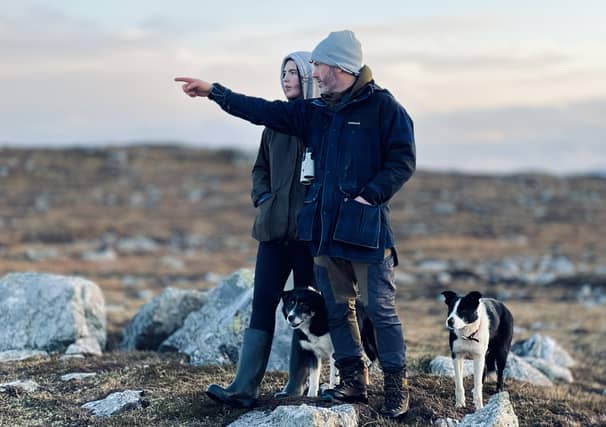

Somewhat counter-intuitively, the BBC Scotland series “This Farming Life” has been one of the big television successes of recent years. Aside from gamboling lambs and bouncing baby calves, the notion that the daily grind of a life in agriculture would appeal to a broad spectrum audience was fraught with risk – especially given the notoriously camera-shy nature of the community involved and against a general backdrop of a society that’s getting increasingly divorced from the realities of what’s involved in getting food on a plate (well, to a supermarket shelf at least).
Just picture the scene in a boardroom overlooking the Clyde in PQ (BBC offices in Glasgow for ordinary mortals). “Yes, Crispin and Tamara, we think farmers will really go for this and allow us full access, all the blood and gore and trials and tribulations and not only that but that the viewers, even in Bearsden and Morningside, will really go for it”. Response from across the table: “I think I need another decaf latte.”
But, somehow or other, the programme made it - and not only that but eight series on it has been one of the major hits in terms of audience impact.
To their credit, too, the programme makers have featured a family from one of the crofting regions in each of the series. The latest is no exception as we are introduced to Lewis crofter Ally Williamson, one of the few who manages to eke out a full-time living from crofting, and his family.
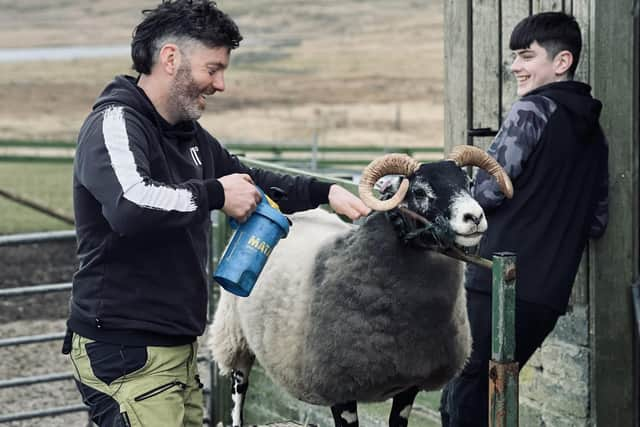
Ally will be well known to the island community, selling ram lambs from his Eallagro blackface flock and contract shearing. But a life exposed to the television camera was to bring an all-together different challenge.
“It started with us about three or four years ago,” he said. “We got a phone call asking if we wanted to become participants in an earlier series.
“At the time the kids weren’t the right age and I wasn’t in the right place for it either to be honest, so we put it on the back-burner and said thanks but no thanks.
“Then last year they came back and said if we would be interested. I asked the kids and they weren’t game for it. But they came back again and we spoke about it and we just thought: You know what, why not just try it.”
Ally suspects that it was through Cammy Wilson of the Sheep Game that connection was made. He posted a video on his YouTube channel of a visit to the Shiant Isles with the crofters who keep sheep there and that piqued the interest of the producers. Ally was one of the group who accompanied Cammy.
“It was never definite that we would do it (This Farming Life),” he said. “You’re opening your lives up to whoever wants to see it. You’ve no idea what’s going to be on the screen until it’s on it. We were very apprehensive - did we want to do it, did we want to expose ourselves in that way? Obviously you’re going to get some criticism whatever you do, so you open yourself up to that as well.”
As they hummed and hawed over participation, not even the success of past programmes was enough to provide re-assurance. “I knew some who were involved before, so no, not really. But as soon as the crew came up and met us it was different.
“You do the filming with two crew members and they made it so easy for us. You have to place your trust in them but they made things far easier for us than I anticipated.
“They really did become friends. I know it’s obviously their job but they were absolutely brilliant. It’s not just myself and the kids either, there’s my father and mother - it was all sorts of different age groups they had to interact with and they were brilliant. They put us at ease.”
Still, though, the Bragar crofting household - and probably the whole village - remains on tenterhooks, waiting for the big opening reveal next Tuesday. “We haven’t seen even ten seconds of it. We don't know what's been used or what’s been cut. We’re sitting here thinking: Oh, I hope they don’t use that, or whatever. But all the other participants are in the same boat.”
Very much a family affair
The Williamsons are not, it’s fair to say, your typical crofting family, not in an island sense anyway. With 450 breeding ewes and a separate interest in Harris, they operate on a far larger scale than others.
And Ally is keen to stress that it’s the collective that makes it work. “There’s myself and Bethany and Noah, my father is also involved and my mother is there pulling the strings in the background and my partner Maggie as well.
“We’re running a lot more than most in the island but that’s why every helping hand counts. I’m very fortunate that the kids are willing to take part - and not just when their Dad shouts at them, but they take the bull by the horns and do things themselves.”
Being relatively large in scale was not always on the cards, but for Ally it came about through “determination and a case of try it and see”.
“We’ve been very fortunate here to be given areas of crofts to use. Without that we wouldn’t be able to do even a third of what we’re able to at the moment. All our sheep are lambing in-bye - none of it is lambed on the hill due to predation.”
Around five years ago Ally was given the chance to take over the running of a hill in north Harris, following the passing of well-known crofter, character and sheep enthusiast Angus Campbell of Bowglass, someone from whom Ally learned a lot while gathering on the extensive hills and moors of North Harris.
While he knew it would be a challenge to take over his responsibilities, he wasn’t quite prepared for just how much – and the danger was to come from up above, from sea eagles, which threaten to all but wipe out traditional hill systems.
“It was,” said Ally,”a very steep learning curve. We’ve had to change our whole system due to sea eagles.
“In Harris it used to be a case of hands-off. But now it’s a case of if you leave them you’re looking at losses of 70 to 80 per cent. That’s the harsh reality and, hopefully, that will be portrayed in the programme. We now need to take the Bowglass sheep back to Bragar for lambing if we are to have any Bowglass flock left.
“The traditional hill thing is teetering on a knife edge. The number of sheep that are going to the hill or able to be there – along with the number of crofters and shepherds who know how to work the hill – is disappearing at a massive rate of knots.
“What the future holds I don’t know, but there has to be a huge turnaround in terms of use of the hill and common grazings. And it's got to start with the youngsters and education. We need to get the youngsters to understand the benefits of the systems that have been run in the past and with a little bit of modern technology added into the mix, it can help.
“Crofting is not easy and not easy to get into, but we need to stop focussing so much on the negatives. There are more young people now willing to adopt our way of life.
“Nobody needs to get it right, and certainly not straight away. But we need to keep that encouragement going and to get them to give a go. If that means people like myself giving up ground so others benefit then I think that’s something we should be doing. We’ve got to incentivise the young - otherwise it will die. There’s no doubt about that.”
Ally tells the story of how he was encouraged himself by an old crofter along the road who gave him a couple of lambs while a young boy and “everyone who has livestock can do that small bit”.
“Again, I’m fortunate in that I’ve two kids who want to do it but if being involved in this programme highlights that youngsters like them need the help – and crofting in general needs the help – then that’s good enough for me.”
And of course, he is aware of far wider and fundamental issues. “There is a real lack of knowledge of our crofting systems and why they’re important.
“In terms of policy and support, we're treated as farmers and in a sense that’s understandable: we work the land to provide food. But I’m not a farmer. I’m a crofter.
“We are completely different in the way we go about things and what we achieve. There can’t be this one-size-fits-all approach to the funding and support. It really needs to be looked at again and and if a few sentences from me on This Framing Life lifts the eyebrows of a politician somewhere then even that alone would have made it worthwhile.
“Also, I just want to preach and wax lyrical about how well the Lewis and Harris crofters are doing. What we’re actually achieving given our constraints is pretty remarkable. We know on the island we don’t get anywhere without the help of others and that needs to be highlighted.”
Speaking of which, Ally is keen at every opportunity to praise the role of Noah (16) and Bethany (14) and to get them involved in every aspect.
He encourages Noah into the discussion. “Well, I’ve just kind of grown up with it,” says the 16-year-old. “I’m not going to lie, when I was younger I wasn’t as into it as much but more recently I definitely am and Bethany and I are very involved.
“For me I quite like taking responsibility and, when I can, make my own decisions and decide for myself. It gives me a chance to test myself if I were to run my own croft.”
Bethany says: “For me, it’s 100 per cent the lambing, especially when I am left alone to get on with it.”
Ally explains how Noah is heading to Fife for three weeks to do a lambing and he himself is due to go away for three days. “It means Bethany will be in sole charge of lambing and I’ve absolutely no qualms about leaving her with it.” Not at all bad for a 14-year-old.
“We are so just thankful to have the opportunity to have done this and thankful to everyone around us as well,” said Ally. “Yes the focus is on us as a family in the programme, but as everyone knows it’s about a lot more than that.
“We couldn’t function without the wider crofting community and that wider help and support. I hope that comes across in the programme cause that’s the whole essence of the crofting life in the islands.”
(The new series of This Farming Life starts on BBC Scotland, Tuesday February 24th at 8pm)