
After 60 years, we need a new development agency for the edge

BRIAN WILSON looks back on 60 years of Highlands and Islands Development – and proposes a powerful new agency devoted entirely to Scotland’s periphery
Sixty years ago this week, the Highlands and Islands Development (Scotland) Act became law – by far the most radical piece of legislation directed specifically towards the region since the Crofting Acts of the 1880s.
Neither has there been anything to compare with it since, as confirmed by the feeble “land reform” and “crofting reform” Bills currently going through Holyrood. Maybe this anniversary could be used to revisit the original aims of the 1965 legislation in order to consider how they might yet be delivered, if anyone still cares.
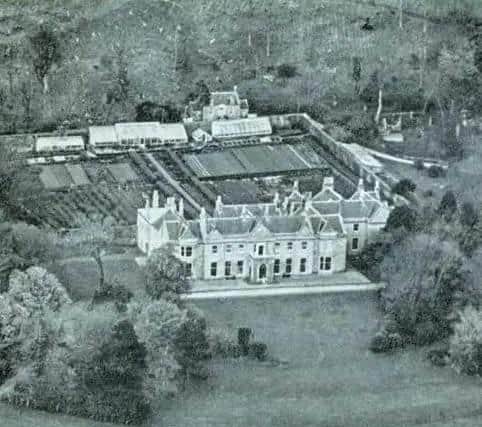
In his book, Highland Experiment, James Grassie – who was there from the start – wrote: “The founders of the HIDB seemed clear that the two chief targets of their creation would be to reverse the drift of people away from the Highlands and to tackle the land issue”.
These were noble objectives which the legislation only partially enabled. On depopulation, the headline statistics have continued to belie the reality of continuing decline in parts of the Highlands and Islands which most needed support. On land reform, the powers granted to the new HIDB have rarely been backed up by the political will to use them.
The creation of a development agency for the Highlands and Islands had long been argued for, in recognition of dire economic circumstances and depopulation which prevailed in the post-war years. Its establishment was a manifesto commitment by Labour in advance of the 1964 General Election, delivered within a year.
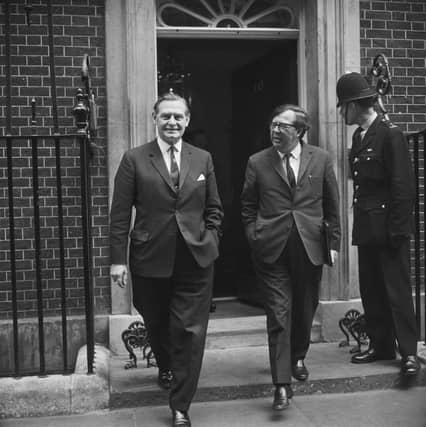
Expectations were raised by the rhetoric which surrounded the Bill’s introduction. The Secretary of State for Scotland, Willie Ross, declared the Highlander to be “the man on Scotland’s conscience”. It was also widely perceived – not least by landowners – that the Board would have strong powers to tackle the land issue.
“Land”, declared Ross, “is the basic resource of the Highlands and any plan for economic and social development would be meaningless if proper use of land were not a part of it”. The new Board would have powers to acquire land, compulsorily if necessary.
As the Bill made its way through Parliament, the limited circumstances in which these powers could be used – even if the Board chose to do so - had become more apparent. While the Tories did not like the concept of a public authority with strong interventionist powers, they did not ultimately oppose passage of the Bill.
In many respects, the early work of the Board lived up to the hopes of those who had argued for its creation and there were few communities in the Highlands and Islands which did not benefit. From the outset, for example, there was a serious commitment to revival of the fishing industry on the west coast and in Shetland.
However, in the Board’s first annual report, a challenge was set for it which has never been met. The chairman, Sir Robert Grieve, wrote: “No matter what is achieved in the eastern or central Highlands, the board will be judged by its ability to hold population in the true crofting areas”. These areas, of course, included the Western Isles.
To some extent, Grieve himself was responsible for the relative lack of success. One of the fundamental differences of philosophy which existed in the board’s early years was around the question of “growth point strategy”. Grieve was a distinguished planner who favoured the notion that by concentrating on “growth points” – mainly the Cromarty Firth and Lochaber – benefits would trickle down to the periphery.
Unfortunately, the theory tended to pull in the other direction. The more industry developed in these “growth” areas, with the help of HIDB investment, the stronger they became as magnets which drew people away from the west coast and islands where well paid employment was unavailable. From the outset, there was more conflict than synergy between the interests of “east” and west within HIDB territory.
As far as serious intervention in land issues was concerned, the hopes of reformers – and fears of landowners – were soon put to rest. The first test case arose in the Strath of Kildonan in Sutherland, a place with great historic resonance, where there had been a study prior to the Board’s inception about how the land could be used productively and population secured.
The new Board, having inherited this report, rejected any of the options put forward on grounds that they could not be justified economically. The Board’s purpose, they said, was "primarily economic rather than social, in the sense that a positive return is expected on all the investment proposed”. Effectively, that ruled out any intervention in the land market on social grounds – and so it has remained until the Community Land Unit was formed in 1997.
Next up, there was a test of the Board’s willingness to use its compulsory purchase powers, even for very specific objectives. The Raasay scandal involved an individual named Dr John Green who had acquired key properties on the island which he then left to rot. It took the HIDB until 1979 to buy him out.
This notorious episode encouraged the third chairman of the Board, Sir Ken Alexander, to seek enhanced powers over land. In 1978, he wrote: “From speeches made by Ministers in the course of the Parliamentary Debates on the Highlands and Islands Development Bill (1965) it seems clear that they accepted the conclusion … that there was much underused, and in some cases grossly misused, land in the Highlands and Islands, and furthermore that better use of a basic resource should be one of the Board’s main concerns.
“This action included the commissioning of research into compulsory purchase powers, procedures and other methods of control of land ownership and use in Norway, Sweden, Switzerland, Spain, France, Italy, Germany and the Irish Republic, and the establishment of a Working Party to frame proposals and prepare a case for the Board’s consideration”. It is probably the last time anyone has looked at how other countries have dealt with issues of concentrated land ownership, which Scotland continues to avoid.
Ken Alexander asked the Scottish Office for enhanced powers “as a means of making effective the powers of land acquisition and use which Parliament voted to the Board in 1965”. However, by the time the Scottish Office got round to responding, the General Election of 1979 had taken place, Labour was out of office and the Tories, who had never really liked the HIDB, certainly weren’t going to strengthen its powers over land.
Despite its reluctance to become involved in land-related issues on social grounds, part of the uniqueness of the HIDB lay in the fact that it did have a social remit as well as an economic one. This gave it far more freedom to take risks than other development agencies and it used these creatively in its early days. For example, it was a bold move to build the Isle of Barra Hotel and to invest heavily in Breasclete and Ardveenish, to stimulate the Western Isles fishing industry.
Originally, the HIDB area consisted only of the seven Crofting Counties. However, this was expanded to take in, first, the Clyde islands and then, in 1986, Moray with its 100,000 population. The latter was a political move since the Tories were still strong in that county. Its significance was not recognised at the time, but it moved the focus – and resources – of the HIDB eastwards, linking up with the emerging “city” of Inverness.
It was an achievement for the HIDB to survive the Thatcher years but in 1991 it was wound up and the 1965 legislation was repealed. In the spirit of the age, the new Highlands and Island Enterprise brand appeared along with ten Local Enterprise Companies, which proved to be not a bad idea. Although the name had changed, the newly-minted HIE continued to exercise much the same functions, with the same strengths and weaknesses.
The Local Enterprise Companies disappeared in 2007 for no very obvious reason. The advent of an SNP government prompted a steady reduction in HIE’s resources. John Swinney, who represented North Perthshire, was credited with a longstanding negativity towards the HIDB/HIE on understandable grounds that the needs of his constituency were not significantly different to those on the other side of the “border”. Unfortunately, the effect was to level down rather than level up.
An attempt to get rid of HIE altogether was made in 2016 but the agency still commanded sufficient support to force a retreat by the Scottish Government. As part of the centralising agenda, the idea was to create one “national” enterprise agency to replace HIE, Scottish Enterprise and Skills Development Scotland. When the climb-down was announced by the Minister, Keith Brown, he said a “national strategic board” would be established to “align the work of the agencies” but, mercifully, this never materialised.
So HIE continues and its work is valued but, as most people in the Western Isles would recognise, it exists in a significantly diminished form from what can easily be remembered, far less what was envisaged 60 years ago.
This potted history misses out a lot of very significant developments in the interim – the advent of North Sea oil, the Crofting Reform Act of 1976, the decades of Objective One status, the University of the Highlands and Islands, to mention but a few. So what needs to be done now?
The answer to that lies in reverting to the founding objectives as defined 60 years ago – to reverse depopulation in the most fragile areas and, in these places at least, to do something of substance about land reform. I have long believed that the best way of achieving these outcomes would be through a new agency which recognises the realities which have evolved over six decades.
Nobody can now claim that the citizens of the City of Inverness should be on anyone’s conscience, any more than those of Stirling or Perth, or that the challenges faced by Elgin or Buckie have anything whatsoever go do with “Highlands and Islands Development”. John Swinney and Keith Brown were not all wrong. There is a perfectly good case for most of Scotland coming under a single development agency.
That would leave the periphery with one of its own with comprehensive powers and resources which might really make a difference; a development agency more akin to Ireland’s Údaras na Gaeltachta which could easily incorporate the work of the Crofting Commission, Crown Estate, Marine Scotland, Bord na Gàidhlig and quite a few others as they affect these areas of continuing depopulation.
A single, powerful development agency for Scotland’s periphery as a last stand against economic, social and cultural decline? That would be an outcome worth legislating for, perhaps even on a par with the spirit of 1886 or 1965.