
CalMac chaos is entirely political
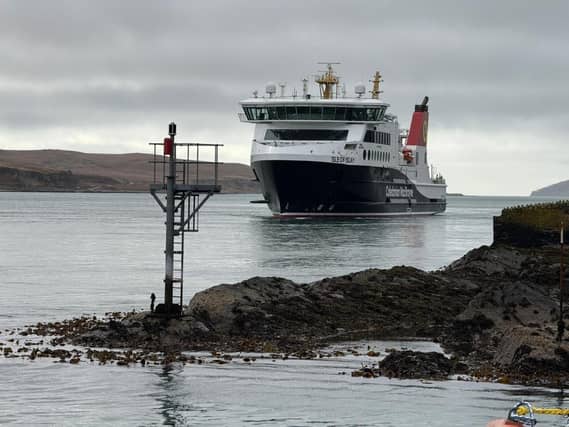

As the Holyrood election campaign begins, events have thrust ferries into the political spotlight. That is appropriate as politicians created this ongoing crisis, no matter how much they now try to evade responsibility.
When Alasdair Allan, after nearly 20 years as MSP for the Western Isles, calls on Caledonian MacBrayne to “explain properly to communities how they got into this position”, some may feel that he should first examine his own political conscience.
It suits some politicians when frustrations are vented against CalMac who are at the sharp-end of decision-making – which vessel from the stricken fleet to deploy where? But who put them in that position?
A far more fundamental question for the future is about how our ferry network is governed. That is a matter which only politicians can determine and until they come up with a transformational answer, the same outcomes will arise in one form or another.
Perhaps the biggest scandal of the past five years has been the refusal of the Scottish Government, in the face of all evidence, to countenance this need for structural reform, involving a decisive shift of empowerment towards the island communities with most at stake.
Instead, they have dug deeper into maintaining a discredited system of remote control which is designed to exclude islanders from any meaningful role in this crucial aspect of their own affairs. Not only has this proved monstrously inefficient and expensive, it is also deeply insulting.
So politics and ferries are inseparable because that is the way the Scottish Government has chosen to make it. Every decision which has led to the current dismal state of affairs has, to lesser or greater degree, been taken politically.
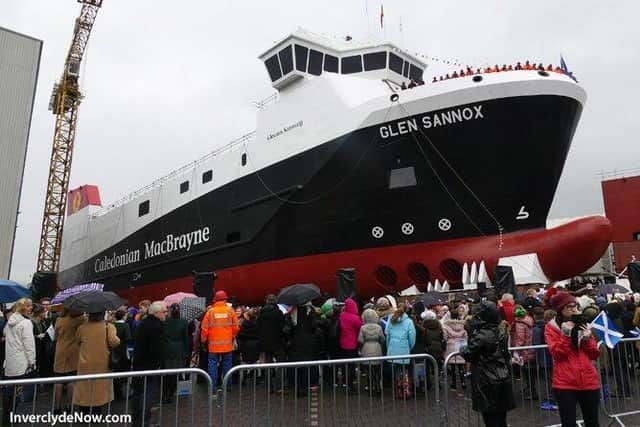
The failure to invest consistently in ferries was political. The Ferguson contract award was political. The bogus launch with painted on windows was political. The appointment of quango boards is political. The exclusion of local involvement is political. And so on.
All of these outcomes were determined by Ministers who came and went without a backwards glance – leaving a legacy of chaos and money squandered on a monumental scale. None of them has paid any penalty for the damage inflicted on island communities.
Yet there is absolutely no need for it to be like this. If Caledonian MacBrayne was an arms-length, state-owned island company, with financial parameters to live within, it would be accountable for its own failures and successes. Except in extremis, political involvement would be minimal.
At present, we have the worst of all worlds – a politically controlled structure of governance, via politically appointed quangos, but with no political willingness to accept accountability. In other words, a dog’s breakfast which has led to the outcomes we see around us this week.
Nowhere else in the world runs their ferry networks like this. No other government goes out of its way to exclude the communities most directly affected from decisions which are crucial to their wellbeing. This is a uniquely Scottish brand of centralised power without responsibility.
The forthcoming elections present an opportunity for islanders to say with a collective voice: “We have had enough. Things must change”.
THE ONLY point I can make in defence of those who have held office in Edinburgh over the past decade is that the same mentality among civil servants goes back further than that. For at least 30 years, they have driven efforts to privatise and/or break up CalMac while determined, when that did not prove possible, to keep it on the shortest possible leash. Edinburgh would always know best.
In the 1990s under the Tories, the wheeze was for “route licensing” which would have broken up the network, given the plum routes to private operators and left the remainder as a subsidised liability for the public sector.
It would also have deprived the Clyde and Hebrides network of an essential strength – the ability to move vessels around as cover, when the need arises. Ironically, the events of recent years have confirmed just how important it is to retain that flexibility.
That initiative was pushed back by united island resistance. I remember co-convening with the late LibDem MP for Argyll, Rae Michie, a “ferry summit” in Oban which brought together Parliamentarians, local authorities and community groups from across the CalMac network to create a united front.
It is worth asking, in passing, why no such gathering has taken place since, despite the obvious need? And why have MSPs representing CalMac constituencies never united and raised their voices as a pressure group at Holyrood?
When route licensing failed, the next move by those in Edinburgh who wanted rid of CalMac was to promote separation of infrastructure and vessels from the actual ferry operations. The idea was that if the contract to run the network went out to tender, a private operator – probably Serco – would prevail.
As I well recall, the tactic used to push this objective was to insist for years that it was legally necessary in order to comply with EU competition law. Eventually, the Lab-LibDem government of the day concluded that they could not ignore this legal advice which led to the creation of CMAL as the owner of infrastructure and vessels.
No longer did CalMac design or build its own ferries or the shore facilities they would use. Instead, the theory was that these facilities would be “user neutral” – i.e. whoever won the contract would have access to the ferries and infrastructure. It was a recipe for disaster.
In practice, it was never politically possible to award the contract to anyone other than CalMac so the whole exercise of splitting the two functions had been a complete waste of time and money. But although the legal fiction was discarded, the separation of responsibilities was allowed to continue even after the last vestige of justification disappeared with Brexit.
The folly of this separation was critical to the Ferguson shipyard debacle which has been at the root of much else. CMAL were nominally the clients for the two doomed vessels but the instruction to build them at Port Glasgow was taken by Ministers in Edinburgh, with CalMac – who would operate them – having absolutely no say.
It is safe to conclude that, between the two ferries and associated shore infrastructure – some of it at ports they will never sail to – the cost of this exercise has been in excess of £1 billion. What could have been done for the islands with that kind of money?
Now that CalMac have been awarded a ten year contract to run the network, there is no case whatsoever for retaining CMAL as a separate entity – other than to maintain Ministerial control over decision-making without directly interfering in the operations of CalMac, with the political exposure this would bring.
GETTING RID of CMAL as a separate entity should be the first essential step. But that would still leave one quango rather than two. And this is where the need for fundamental reform comes in.
There is one basic fact which should be hammered home during this election period. It is that throughout the decade of events which led to the point we are at this week, only one individual (Murdo Maclennan) with lived experience of the islands which CMAL and CalMac exist to serve was briefly allowed near governance - and he was got rid of.
The Scottish Government’s public appointments process has been proven rotten to the core with outcomes predetermined to ensure the exclusion of island involvement. That structural issue is not going to be resolved by the reluctant appointment of one or two random individuals.
Instead, there should be a new Caledonian MacBrayne Shipping Company with a statutory requirement for local authorities and communities to be represented at board level. It should be independent of government once parameters of subsidy and responsibilities have been determined. It should be a company which exists solely to serve the islands, based in the islands.
That’s pretty much how they do it in British Columbia and it is the best available template to follow.
IN CONTRAST, what actually exists is not only hopeless but grossly offensive and should have been called out long ago by MSPs representing island constituencies – particularly the Western Isles which is the only whole constituency which is dependent on CalMac.
How can it be that an individual based in Copenhagen, with absolutely no knowledge of, or concern for, these islands has been at the head of these organisations for 15 years, during which he has barely (or not at all) visited places worst affected by the calamitous decisions he has presided over? Can Alasdair Allan offer a rational defence of this? Has he ever met him?
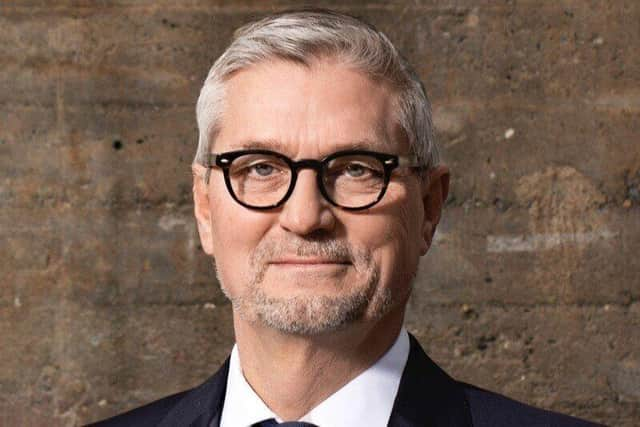
One has to wonder what hold Erik Østergaard has over Scottish Government ministers and civil servants that leads to his repeated reappointments, no matter what is happening in the real world of Caledonian MacBrayne. The answer probably lies in the fact Østegaard was chairman of CMAL throughout the whole Ferguson scandal, and knows where the bodies are buried. But why was he chairman of CMAL in the first place?
The Gazette has repeatedly highlighted the scandal of these appointments – like the fellow who, almost simultaneously, was appointed both a CalMac director and a member of the Western Isles NHS Board, despite (or because) of never having set foot in the Western Isles in his life. But, frankly, it is not the media which should have been challenging these abuses. It is the politicians.
As long as the governance of ferries is dependent on a quango system of appointments, motivated by retaining control in Edinburgh, nothing will change. The transfer of responsibility to the islands cannot be left to grudging tokenism. It must be comprehensive, creative and underpinned in statute.
It is also noteworthy that while Ministers with responsibility for ferries have come and gone with regularity, none of them has represented a constituency which has ever seen a CalMac ferry. From Ullapool down to Islay, all of them have had SNP MSPs – none of whom has been deemed appointable to the role.
So we have had Ferries Ministers from Pollok, Kincardine, Linlithgow, Aberdeen …. anywhere, really, apart from a constituency with an island or a ferry in it. The exact opposite of how it should be.
So let’s ensure that ferries are an election issue in the Western Isles with every candidate forced to state a position which goes beyond saying how awful it all is or, in the immortal words of Alasdair Allan: “Solutions involve building more ships”.