
Campaign to tackle air fares injustice
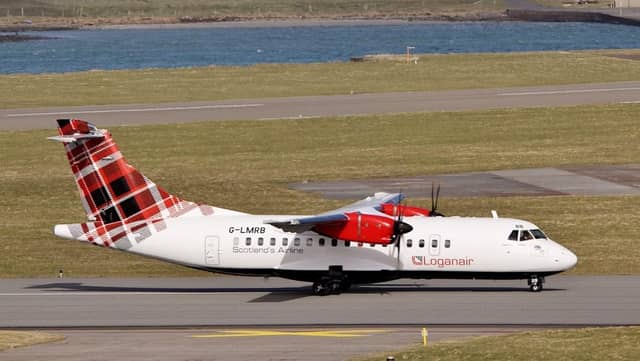

The “eye-watering” levels of air fares now affecting the Western Isles are to become the focus of a campaign to persuade the Scottish Government to match European levels of support for internal air services.
It is understood that Loganair, who operate the services, have indicated willingness to work with local authorities to argue a case which would include extended use of Public Service Obligations to support uneconomic routes.
A review of landing charges imposed by Highlands and Islands Airports Limited – itself a wholly owned subsidiary of the Scottish Government – will also feature in the list of factors cited as responsible for high fares.
The new moves come as a Scottish Government minister branded any extension of the Air Discount Scheme as “unaffordable” and turned down a request from Shetland MSP, Beatrice Wishart, for reinstatement of use for business travel. The ADS, across all the islands, cost £13 million last year.
The profile of the issue has increased sharply in recent months as the cost of flying to and from the islands has soared, particularly for anyone who has to book at short notice for business or personal reasons.
Return flights between the central belt and Stornoway or Benbecula can cost in excess of £600 and regularly exceed the £500 mark. Even with support from the Air Discount Scheme for local residents, return fares of around £300 are no longer uncommon.
The leader of Comhairle nan Eilean Siar, Councillor Paul Steele, recently described the fares with ADS as “extortionate” and without it as “eye-watering”. He suggested that a Holyrood committee should be asked to look at the issue which was now deterring visitors and making flying “prohibitive” for many islanders.
In response to Gazette inquiries this week, Loganair declined to comment directly on the questions raised. However, they said that following a meeting last week with Comhairle nan Eilean Siar, the prospects for “a collective campaign would be explored”, with a case put to the Scottish Government about the rate of subsidy and impacts on the economy.
This was confirmed by Councillor Uisdean Robertson, chair of the Comhairle’s transportation committee, who met with Loganair representatives in Stornoway last week before they attended a meeting of Harris Transport Forum where the same issues were prominent.
Councillor Robertson said: “They seemed quite prepared to work with the Comhairle. From their perspective, there are a number of issues which are beyond their control and they need support on. There was a lot of talk about what happens elsewhere in Europe to support internal air services, particularly in peripheral areas”.
Among other factors faced by Loganair is decreased availability of the ATR-42 planes which are a mainstay of its fleet, which has forced up leasing costs. This also forces them to use larger planes on routes where demand does not justify them.
Councillor Robertson said that the Stornoway-Inverness route is now regarded as uneconomic and this has led to reduction in services including withdrawal of the Saturday flights.
He also pointed out that the Benbecula-Stornoway route was recently refused PSO status by the Scottish Government, highlighting the need for a review of the rules which govern PSOs, compared to other jurisdictions in Europe.
At the Harris meeting, a number of accommodation providers said they used to get bookings from people travelling by air to Stornoway but this had almost completely dried up, due to the high level of fares. The same was happening throughout the islands, said Councillor Robertson, with an impact on tourism.
One of the concerns raised by the Gazette was the demand which is already coming from construction companies for regular bookings on Stornoway flights next year as the pace of work on renewable energy projects gathers speed.
There are concerns that this will limit availability for other users and we asked if Loganair had any plans to meet this increased demand.
However, the company declined to comment.
At their meeting with the Comhairle, Loganair representatives pointed to a study of how PSOs are applied elsewhere in Europe and the ongoing efforts to put “thin” routes on a more sustainable basis.
The only Highlands and Islands routes which benefit from PSO status at present, with direct government subsidy, are from Glasgow to Campbeltown, Tiree and Barra. In contrast, Norway has 25 PSO routes where peripheral areas are served by the airline Widerøe.
The European Regional Airlines Association, of which Loganair is a member, is currently engaged in a lobbying campaign to achieve greater consistency of approach to PSOs across Europe and this will be directed towards both UK and Scottish governments.
The ERA says that a review “should therefore not overlook the inherent potential and proven track record of PSOs in reducing disparities and promoting territorial development. In this regard, the future PSO framework should ensure more flexibility to enable the creation of new routes and consider a stronger role for regional authorities, given their knowledge of the needs and socio-economic fabric of their territories”.
The Air Discount Scheme was introduced by the Labour-LibDem government in 2006 and originally covered business and NHS travel.
However, it was subsequently limited by their successors to personal journies.