
Highlands and Islands – an aviation test zone for future travel
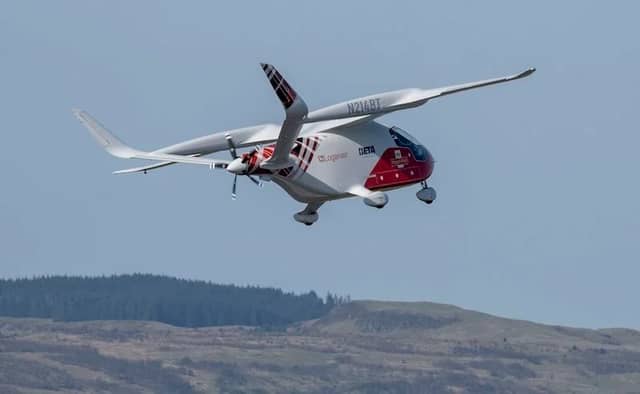

The Highlands and Islands could be the UK’s leading region in sustainable aviation by embracing developments in the fields of drones and planes powered by electricity and hydrogen, according to a new report.
Loganair announced in July that they were investing in five all-electric conventional aircraft for delivery and launch in 2029, after a series of successful trials, while advances in drone technology will enable longer flying times and in adverse weather conditions.
The regional transport partnership HITRANS, which brings together local authorities in the Highlands and Islands, recently held a meeting which included an “Update on Sustainable Aviation”. As well as drones and more economically-powered planes, it also drew on research being undertaken on airships and seagliders.
HITRANS sustainable aviation development Manager Dawn Gillies said the emerging technologies were key in delivering a 10-year roadmap to make the Highlands and Islands the UK's leading region in sustainable aviation.
She said it has the potential to “improve connectivity for remote communities, support NHS logistics, strengthen key industries such as tourism, seafood and offshore energy, and contribute to Scotland’s net-zero goals”.
“It demonstrates that the region is well suited to act as a ‘living laboratory’ for low-carbon aviation, with existing airports, low-congestion airspace and strong renewable energy resources, while also identifying the critical gaps in infrastructure, workforce skills and regulation that must be addressed,” she said. “It proposes a phased roadmap combining public funding, private investment and regulatory collaboration to move from trials to routine commercial services.”
The recent award of two new Zero Emission Flight Demonstrator awards in the summer are seen as the first steps to the region decarbonising aviation by 2040 in line with the Scottish Government's Net Zero targets.
The 18 month feasibility study began last month and aims to “produce an integrated evidence base for government, airports, airlines and local authorities”.
It is hoped that, if successful, the expertise gained will be rolled out to other remote and rural UK regions.