
Stornoway deep water terminal and apprenticeships signal new opportunities
Stornoway is gearing up for a period of economic growth, driven by major infrastructure investment and a renewed emphasis on skills training.
For many on Lewis and Harris, these aren’t just promises - they look set to offer real opportunity, more local work, and stronger links to wider markets.
A transformative project underway is the new Deep Water Terminal at Stornoway Port. A £49 million contract has been awarded to McLaughlin & Harvey to build the terminal, which will significantly expand the port’s capacity.
The terminal is being designed for versatility - able to accommodate large cruise liners, support offshore renewables vessels, work with the energy sector, and service marine transport more generally.
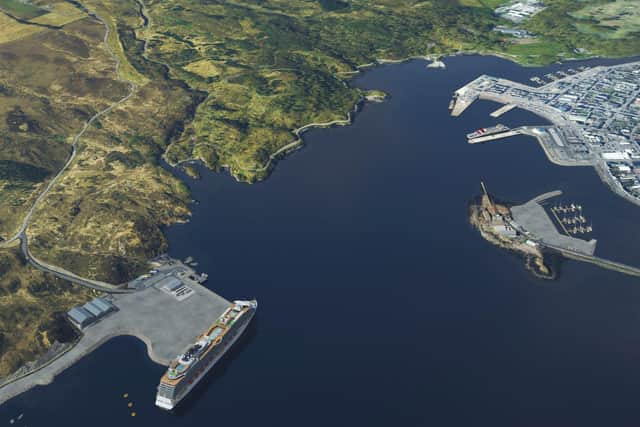

Local leaders describe this as “a game-changer” for the Outer Hebrides. The project is expected to create jobs both during its construction and through the new business it attracts once operational.
Alongside infrastructure, there is stronger momentum in skills development. The Outer Hebrides Campus redevelopment aims to support almost 90 apprentices in trades like carpentry and joinery, working with over two dozen local employers.
Skills development arms such as Skills Development Scotland have reported 150 Modern Apprenticeship starts in Eilean Siar (the Western Isles) in the 2024-2025 year, with a very high proportion aged 16-24.
Meanwhile, the local economy strategy for 2025-2035 notes that public sector employment is higher than the Scottish average, many people are self-employed, and SMEs make up almost 80% of private sector employment.
These developments come against a backdrop where pay and productivity in the Outer Hebrides lag behind more urban areas. The current average income for full-time workers in the Outer Hebrides is estimated at £29,992 for 2023 - about 12% below the Scottish average of £33,690.
That gap emphasises the importance of local jobs, training, and infrastructure investment in helping reverse under-employment and out-migration.
An interesting piece in the picture is the growing importance of remote or flexible work arrangements, which many see as offering life-quality advantages in rural and island settings. For people who don’t wis
h to relocate, remote work with employers based elsewhere is becoming more viable. But arrangements like these often require more formal employment mechanisms. That’s where options like Employer-of-Record (EOR) begin to matter - they allow companies abroad to employ individuals in a location without setting up a full local entity. If people in Stornoway or the Hebrides can access roles professionally administered via EOR, it opens up international work possibilities without relocation.
There are challenges ahead: remote geography increases cost for transport and materials; retaining young people remains difficult; and productivity growth must keep pace with investment to avoid wasted potential. But the signals are strong: infrastructure investment through the Deep Water Terminal, growth in skills training and apprenticeships, and new employment models are together shifting the balance toward greater local opportunity.
For those who live and work here, that means more than improved ports or new jobs; it suggests a future where Stornoway can offer competitive careers, professional flexibility, and better income without losing its island identity. The hope is that people won’t need to leave to build a future; they can build it here.