
Comhairle officials say “No” to Spiorad na Mara
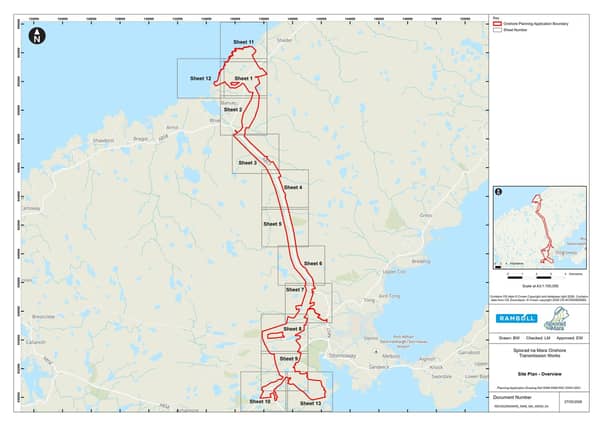

Comhairle nan Eilean officials have thrown a major spanner in the Spiorad na Mara works by recommending to councillors that they should object to plans for the offshore windfarm.
The recommendation, which took many by surprise, will go before Comhairle’s Planning Applications Board next week. The developers, Northland Power, said on Wednesday: “We respect the role of the Council and its members in reviewing the application and will consider any comments or decisions arising from the meeting once that process has concluded.
“Our focus remains on developing a project that supports the transition to clean energy while delivering long-term benefits for the Isle of Lewis and the wider region. We will continue to engage constructively with local communities, stakeholders and decision makers throughout the planning process.”
The report, in the name of chief executive Martin Joyce, recommends formal objections to all three applications related to the project.
According to his report, the ScotWind leasing round far surpassed the Scottish Government’s target of 10GW of potential supply, so refusal of Spiorad na Mara would not impact climate change targets. The report says that maximising renewable generation “should not be at any cost”.
However, the Comhairle is not the determining authority. Scottish Ministers consult on applications made under Section 36 of the Electricity Act 1989 and marine licences under the Marine (Scotland) Act 2010, and Scottish Ministers will make decisions.
The development, proposed by Northland Power, would be a fixed-bottom offshore wind farm with an expected generating capacity of around 900MW, located between six and thirteen kilometres from the coast.
A “chartered landscape professional” engaged by the Comhairle found “overwhelming evidence that the proposed development would be detrimental to the character, quality, and enjoyment of the northwest coast of the Isle of Lewis.”
On cultural heritage, the report concludes that the developer’s Environmental Impact Assessment fails to recognise “the relationship between the marine environment and Outer Hebridean cultural history”
The Comhairle’s primary industries officer warns against “a huge area of inshore fishing grounds being lost to fishing” and that compensation arrangements would not address wider economic losses to the local supply chain.
On socio-economics, the report finds potential benefits “remain aspirational, have significant dependencies, and are at risk of not being secured”.