
Deep hurt over NatureScot’s abject surrender
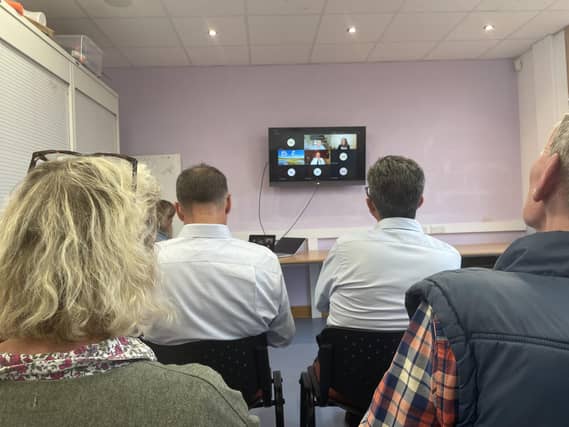

The recommendation by NatureScot officials to refuse a licence for this year’s guga hunt was rubber-stamped by the quango’s board at a special on-line meeting, with board members dialling in from around the country and beyond.
Monday’s outcome was greeted with glee by opponents of the expedition who boasted that it was their campaign which had secured the effective ban and forced the NatureScot board into submission.
While the NatureScot board has claimed to act on the basis of scientific evidence, information from within the quango suggests that the conclusion was “reverse-engineered” and Torcuil Crichton MP has lodged Freedom of Information requests in an effort to shed light on the process behind Monday’s outcome.
As expected, there was no challenge to the recommendation though even some of academics who dominate the board seemed dubious about the methodology used to estimate the future gannet population.
The lead NatureScot official who did much of the talking, Robbie Kernahan, admitted that the model “will need to be refined” going forward but asserted that on available evidence it was “not beyond reasonable scientific doubt” that the harvest would have a detrimental impact.
Crucially, however, Mr Kernahan reported that Scotland’s chief veterinary officer has said that the method of despatch for gugas, a swift blow to the head, is perfectly legal – removing a key element of the propaganda used by campaigners.
Members of the Ness community, along with Mr Crichton and MSP Donald Mackinnon, met in Spors Nis to listen to Monday’s meeting. There was palpable incredulity when Nature Scot chair Professor Colin Galbraith called for “on-going dialogue with the Ness community” – something which has been sorely absent in recent weeks and months.
There was minimal input from board members to the meeting although Dr Ian Gambles advised that NatureScot was confined in its decision-making to the “legal framework”. He added: “Anything surrounding cultural traditions really needs to be for the Scottish Government”.
Deputy chair, Professor Jill Robbie said that “island communities are more in tune with the food systems that sustain them”. However, as there was “reasonable scientific doubt” over potential harm “it was in the best interests” of the gannet population to reject a licence this year.
Professor Galbraith reserved words of criticism for the tactics deployed by protestors to the end and said that the £110,000 committed to repairing vandalism and introducing additional security at NatureScot’s Inverness headquarters would have been better spent on conservation.
He praised NatureScot staff for their efforts and asked board members whether they backed their recommendation to refuse. Following a short pause, Professor Galbraith concluded: "I'll take silence as acceptance.”
Afterwards, he insisted: “We refused the licence because there’s a degree of uncertainty about taking 2000 gannets and we need to be absolutely sure there wouldn’t be an impact.”
Donald MacKinnon MSP said “This is a very disappointing outcome and comes after months of intense abuse from protesters, directed at the community and individuals.
“It was clear from the board discussion that there are questions around the population modelling used to arrive at the recommendation and the subsequent decision to reject the application”.
Mr Mackinnon added: “The inclusion of theoretical future culls in the model when the application was for a licence for a single event seems particularly problematic as does the fact that the 2026 count figures are not yet included in the model”.
“NatureScot must now engage directly with the Men of Ness to find a way forward and strike a balance between maintaining a sustainable population of gannets on Sula Sgeir and allowing guga to be harvested in the future. This will demand a pragmatic approach and collaboration between stakeholders”.
“The cultural significance of the hunt was completely absent from the decision taken. That should not be the case when future licence applications are considered. There was deep hurt in that room in Ness today.
“NatureScot is ultimately answerable to the Scottish Government and I will be raising my concerns directly with Cabinet Secretary Gillian Martin MSP”.
Editorial comment: Forget window-dressing about dialogue and finessing the model for calculating bird population. The simple fact is that the bullies have won. The campaign of vandalism, slander and intimidation has prevailed.
How appropriate that Professor Colin Galbraith’s words to the token on-line “special board meeting” were that “silence means acceptance”. That sums up NatureScot’s ignominy to perfection.
Zealots who targeted the guga expedition can at least agree that the outcome had precious little to do with science. “Once our publicity campaign was up and running, there was only going to be one outcome”, crowed a leading activist.
And he is, of course, right. The men of Ness are assured they can apply next year but what grounds are there for hoping the NatureScot board will have developed a collective spine in the interim? Easier to hide behind a zoom call and an incoherent report, written to order.
It seems likely that the recommendation to the NatureScot board resulted from working backwards, with arguments constructed to fit the opposite conclusion from last year’s. It is not the science that has changed but the climate of aggressive hostility which surrounded the process.
The board of NatureScot may think they have voted for a quiet life but that is unlikely to be the case. Bullies always come back for more. And who can expect otherwise when abject surrender proved so easy to achieve?