
Financial dispute with Glasgow is “destabilising”
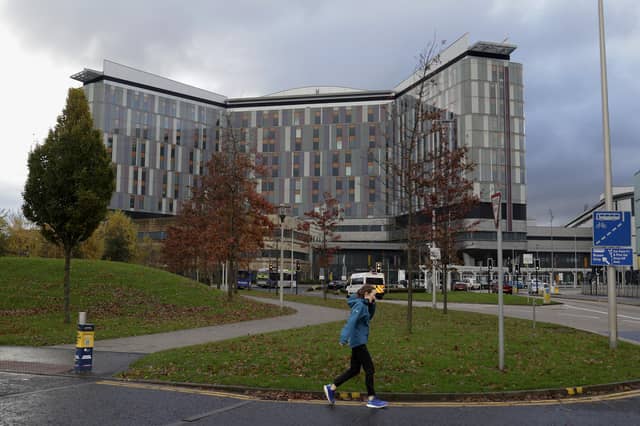

A dispute with the largest health board in Scotland over the cost of dealing with island patients threatens to "completely destabilise" the finances of NHS Western Isles, a board meeting heard last week.
The situation has been on-going for a number of months without resolution, after NHS Greater Glasgow and Clyde, “without warning”, requested a 28 per cent increase in the level of payment, amounting to £1.2 million.
A number of island patients are regularly sent to mainland hospitals for specialist treatment, with Glasgow being the preferred destination, along with Raigmore. The arrangement is set out in a Service Level Agreement, overseen by the Scottish Government.
At a meeting of the board of NHS Western Isles last Thursday in Stornoway finance director Debbie Bozhurt predicted a “break-even” position – but warned of “considerable financial risks”.
In particular, she highlighted “two major risks” – delayed discharges and the outstanding dispute with Glasgow over money.
Speaking at the meeting, Ms Bozhurt said: “One of our boards, again, has tried to increase our SLA by 28 per cent in monetary terms. With this board we have reduced our patients by 34 per cent.
"We would not pay last year and we’re in the same position this year. The Scottish Government have asked us to try and work with them to sort it out. The other boards have not put that increase on their prices.”
She added: “I have not put it in the figures. If I was to put it in the figures it would completely destabilise the board.”
Board member Paul Macaskill called for management to be “firm and consistent with the escalation to the Scottish Government”. “On the information we have at the moment it does appear to be arbitrary,” he said.
Ms Bozhurt said that NHS Highland were also in the same position with Glasgow and “we both work together on this”.
As reported by the Gazette last week, delayed discharges – with elderly people remaining in hospital due to lack of care places and lack of carers – is also creating significant budgetary pressures.
Ms Bozhurt told the meeting that the situation is “affecting flow through the system and in some cases affecting the ability to provide planned care”.
“At least 16 unfunded contingency beds are in use and there is now ‘boarding’ in Day Surgery on an increasingly regular basis often for several days at a time,” she said. “Additional staffing is required to cover this as it is not a unit that is operational and staffed 24/7.”
She warned that population projections suggest the situation will get worse. “We do have a good community but they’re ageing and there is no glimmer of light in the data that’s out there – birth rate still remains very, very low, and the proportion of elderly increasing with all that comes with that, in terms of illnesses etc.
“Certain parts of Lewis and Harris and Uist are faring worse. For instance, Uist has very, very high levels of an elderly population which makes it even more important that we have good transport links.”