
Offshore wind is now about “picking winners”
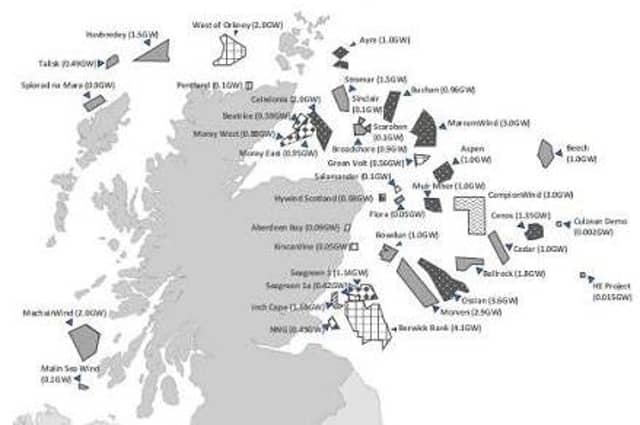

Uncertainty about prospects for “floating wind” projects around the Scottish coast could have major implications for developments earmarked for waters to the west and north of Lewis.
“Scotland on Sunday” reported this week that “crisis talks” have been held to prioritise just four floating wind projects in the ScotWind round due to increasing costs and failure to develop a domestic supply chain.
Implications for the Western Isles could come in several forms:
- Increased pressure on the Scottish Government to ensure development of Spiorad na Mara, regardless of planning objections, as it is an outlier in the ScotWind programme as a “fixed bottom” site close to shore
- The Talisk site awarded to the Norwegian company Magnora, 35 kilometres north west of the Butt of Lewis, is not being quoted as a priority project giving rise to doubts about its development. The same goes for Northland’s Havbredey site.
- The 1.8 GW interconnector, currently going ahead, would be nowhere near capacity without these projects, which could create additional opportunities for community-led developments with plenty capacity to spare.
Kajsa Jernet, lead offshore wind analyst for Bloomberg, told a conference in Aberdeen: “The industry has been caught up in a negative spiral where the supply chain doesn’t have the order certainty it needs to invest which brings higher costs, leading to project delays and decreasing project viability.
“The first year of gigawatt-scale installations is still more than a decade away. We expect floating wind to remain niche in comparison to bottom-fixed offshore wind all the way out through to 2041”.
A senior industry source told “Scotland on Sunday” that the initial ScotWind announcement had created huge optimism “but we’re coming off that sugar rush now. ScotWind was a complete moonshot – there’s going to be more attrition. We will likely see more leases relinquished”.
They added: “We need to put forward a more credible offering, rather than kidding ourselves that we’re going to be deploying gigawatts and gigawatts of floating wind by 2030 or 2035. Actually, what this is now about is picking winners”.
Clare Lavelle, the industry chair of the Scottish Offshore Wind Energy Council, said: “I need to be absolutely honest in saying it’s an incredibly challenging environment in which to be progressing floating projects at the moment.
“We are nearly five years on from the award of the ScotWind projects. This was a programme we thought was going to be fully constructed by 2030. I don’t think we thought we would be in the position we are today.”
When the Magnora licence was granted, the company said its ambition was to achieve full consent in 2026, reach the final investment decision in 2028 and start production in 2030. However, these timescales do not now see remotely achievable.
While Northland continue to press ahead with their Spiorad na Mara plans, they have been refused planning consent for offshore developments by Comhairle nan Eilean Siar, though the final decision will rest with the Scottish Government.