
Guga FoIs – NatureScot rejected their own internal advisers
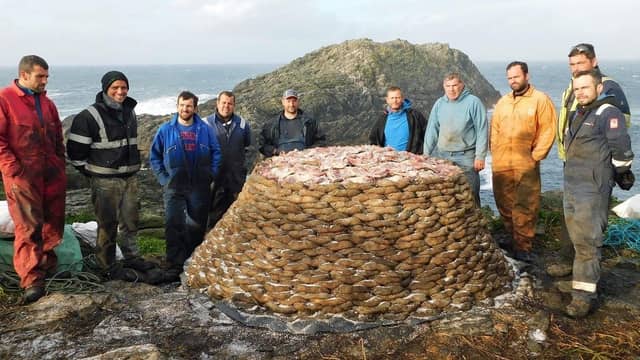

Internal NatureScot documents released under a Freedom of Information request have confirmed that scientific advice favoured granting a licence for this year’s guga hunt to Sula Sgeir.
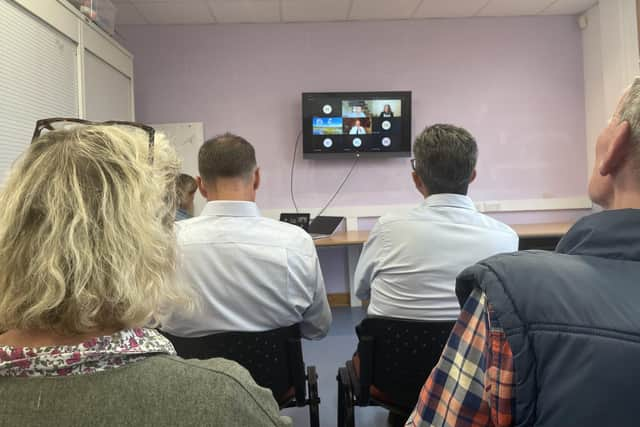
The key document was written on July 17th – just two weeks before the NatureScot board met on a zoom call to rubber-stamp the recommendation which was before them – and reached the exact opposite conclusion to the July 17th advice.
While the name of the author of the advice is redacted, it was clearly written at a senior level and addressed to Robbie Kernahan, NatureScot’s Director of Green Economy, who was responsible for the report which ultimately went before the board.
The actual advice which was over-ruled in the course of the following two weeks was:
“Our assessment takes account of the responsibilities under the various pieces of legislation. We have taken a risk-based, precautionary but proportionate approach which takes account of currently available evidence… in accordance with the statutory obligations under the various legislation and concluded that a take of 500 chicks will not have an adverse effect on the site integrity of the North Rona and Sula Sgeir SPA, subject to a number of mitigation measures which we can incorporate into licence conditions.
“We are therefore recommending that for 2026 the Board issue a licence for the take of 500 birds”.
The paper then goes on to thank the local NatureScot representatives, Stuart MacQuarrie and David Maclennan for their advice. “Also can you please thank everyone in your teams who has provided the advice necessary to support us getting to this stage.
“It has been a bit challenging sometimes for some folk to understand the different roles and perspectives that the different parts of NatureScot bring to the process and I want everyone to know that we couldn’t have got this far without them and I am hugely grateful to all their contributions which have enabled (redacted) and myself to pull this Statement of Reasons together”.
However, it soon proved that the upper echelons of NatureScot were not in the least grateful for the advice that they did not want to hear, and the machine went into overdrive in order to find a rationale for overturning it.
On 22 June, one NatureScot official had ridiculed the advice of a colleague to refuse the allocation saying that evidence quoted by him or her was “unintentionally misleading” by confusing the terms “decline” and “decrease”
It was “manifestly” not the case that the annual 2000 take, prior to avian flu, had impacted negatively on the Sula Sgeir population.
The impact of the disease had led to a decrease in the number of birds but the population was not in decline.
Rather, the writer pointed out, the gannet population on Sula Sgeir was “already back at the reference population based on the 2024 count”.
The writer pointed out: “If we were carrying out this exercise 90 years ago, on the cusp of a 200 per cent increase over the following decades, the MO advice would have reached the same conclusion as it does today. And in this way of framing … they would have been right! If the directions we’re following lead us to a cul-de-sac, our directions must be wrong”.
The same memo questioned why windfarms were being brought into the internal NatureScot discussion. “The applicants don’t care about our issues of internal consistency between how we assess this licence application, and how we assess offshore wind casework. Why should this assessment need to align with offshore Electricity Act casework, rather than with our assessment of other licence applications affecting Natura sites?”
Another assessment which discounted the argument that the granting of a licence would threaten the population said: “What is most reassuring from these models … is that they are in accord with what we might expect given the very considerable amount of historical data we have for the colony.
“North Rona and Sula Sgeir was designated as an SPA (Special Protection Area) in 2001. It met the SPA classification criteria while 2000 guga were being taken annually. It would thus be more surprising if the PVA model suggested that the continuation of the tradition was not compatible with maintaining favourable conservation status”.
Despite all of this, the high command of NatureScot used the two weeks between the recommendation to approve to turn it into a decision to refuse. In their statement of refusal, the Board of NatureScot quoted exactly the claims that their own officials had told them were not true.
In an effort to rationalise their decision as opposed to approval of a 500 bird licence in 2025, the NatureScot board said: “We committed to commissioning a new population model that would be able to incorporate the impact of one-off mortality events (avian flu) and other sources of mortality influenced by human behaviour.
“The new model was produced in 2026, and when a one-off mortality event (avian flu) was included in the model, avian flu was predicted to have the largest single impact on the long-term recovery of the gannet population of all the impacts considered.
“When the cumulative impact of avian flu, offshore wind farms, bycatch, and the gannet hunt were understood together, we have concluded an adverse impact is possible on the Sula Sgeir gannet population”.
However, the emergence of a “new model” between July 17th and August 3rd seems a lot less likely than the influence of the vandals and bullies who had browbeaten the learned professors on the NatureScot board into meek, unscientific submission.