
Ongoing care required for cardiac arrest survivors

A new report has been issued by the Lucky2BHere charity which details that, while significant progress has been made on dealing with emergency cardiac arrests, significant gaps still remain in the ongoing support available to survivors, their families and the ordinary people who help save their lives.
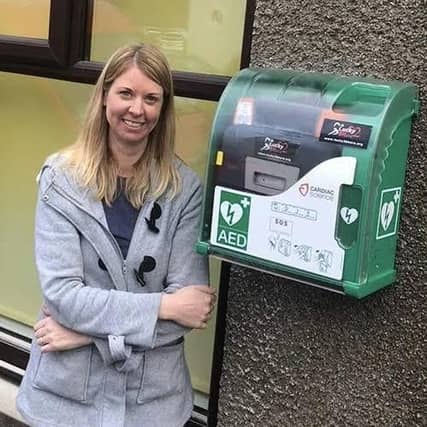
The research was conducted by the charity’s Lewis-based campaigner, Michelle Macleod, who suffered a sudden cardiac arrest at the end of a marathon relay run in 2019.
She received CPR and defibrillation in a rural location before being airlifted to Glasgow, where she spent 12 weeks in hospital and had an implantable cardioverter defibrillator fitted.
Following recovery, Michelle has been heavily involved with the Lucky2BHere charity, which works to place defibrillators and deliver emergency life support training to communities throughout Scotland.
The charity’s new report, “Wellbeing Needs of Sudden Cardiac Arrest Survivors and Rescuers”, was launched to coincide with Restart a Heart Day, which was marked last Friday.
The project involved one-to-one interviews with 15 people across the Highlands and Islands, including survivors, rescuers and co-survivors.
In terms of ongoing care, the report found that none of the cardiac arrest survivors interviewed reported being routinely offered dedicated mental health or wellbeing support following discharge from hospital. Additionally none of the rescuers reported being offered formal support after their involvement in a resuscitation attempt.
The findings also highlight survivors' difficulties with memory and concentration, anxiety, fatigue, isolation, returning to employment and accessing appropriate support during recovery.
Michelle said: “Restart a Heart Day is incredibly important because ordinary people can and do save lives. I am only here today because people knew what to do when my heart stopped.
“But saving someone’s life is only the beginning. What happens afterwards can be an incredibly difficult journey, not just for survivors but also for their families and the people who helped save them.
“The medical care I received was extraordinary, and I will always be grateful to everyone who helped save my life. But there is a huge difference between surviving a cardiac arrest and recovering from one.
“Through this project, I wanted to give people the opportunity to speak openly about their experiences and find out whether others were facing similar challenges. These are often invisible difficulties. Someone can look perfectly well on the outside while struggling with things that used to come naturally.
“The work of the medical professionals who save lives is remarkable, and we owe them an enormous amount. But the experiences shared through this project show that there are gaps which deserve attention.
“Support should not be one-size-fits-all, and people should be able to access it when they need it, even if that is months or years after.”
Lucky2BHere is planning a gathering in Inverness in early 2027, bringing together sudden cardiac arrest survivors and co-survivors from across the Highlands and Islands.
Pam Gowie, Chair of the Lucky2BHere board, said: “On behalf of the trustees, we are delighted to see the launch of this report, led by our colleague Michelle Macleod.
“Since the launch of Lucky2BHere in 2009, we have seen lives saved by the willingness of ordinary people to get involved. But we also know that, for both survivors and rescuers, the period after a rescue can be challenging in many ways.
“Hence, we remain committed to providing life-saving defibrillators and emergency life support training, alongside signposting rescuers to appropriate support, to ensure that ordinary people can and do save lives.”