
How the Hebrides captured the heart – and eye – of a master

Photography has played a big part over the decades in forming perceptions of the Hebrides and not always to the advantage of those who live and work in these places.
In times past, stylised images of reluctant subjects were used to support the “othering” of a remote people. Portraits of tweeded gentlemen and servile ghillies played into stereotypes of class and power.
Endless portrayals of idyllic landscapes devoid of life did nothing to recognise that noble men and women forged livelihoods and raised families in the harshest of conditions. And so on.
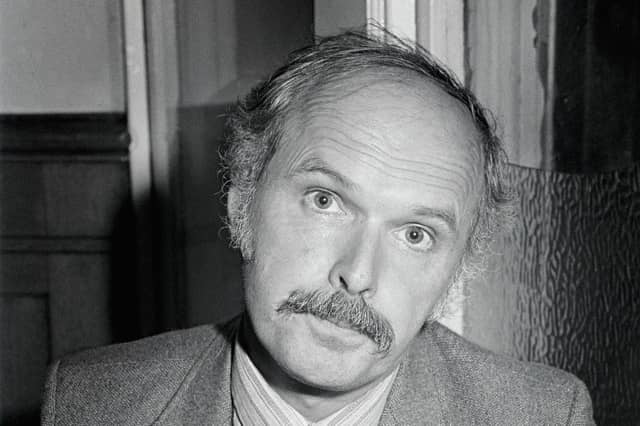
High calibre photographers who were interested in the people more than the setting had been relatively rare and Gus Wylie, who has died at the age of 90, was one of them – following in the footsteps of Margaret Fay Shaw and Paul Strand.
In fact, Wylie met Strand – the American who chronicled South Uist and Eriskay in the 1950s through ”Tir A’Mhurain’ - on one occasion in 1971. Strand advised him on the importance of having a “go-between” to help get inside communities he wanted to photograph.
Gus also cited the influence of American photographers working for the Farm Security Administration - part of Roosevelt’s New Deal in the Depression years of the 1930s - as an inspiration in developing a compassionate approach to social documentation.
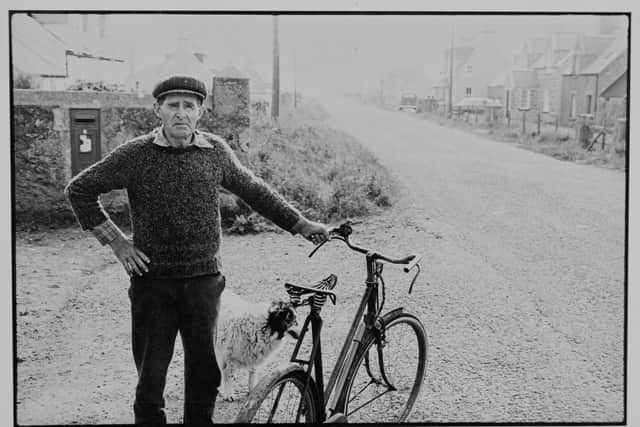
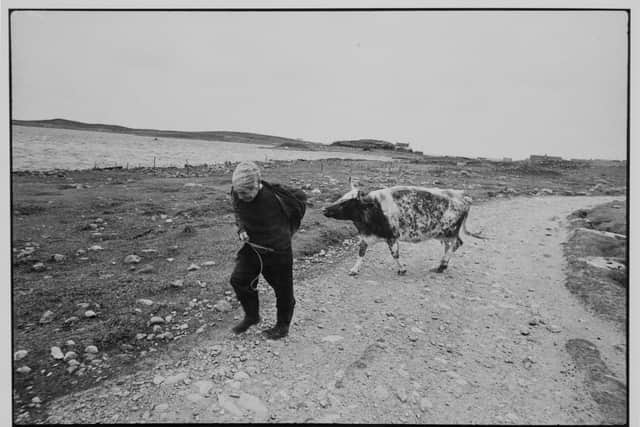
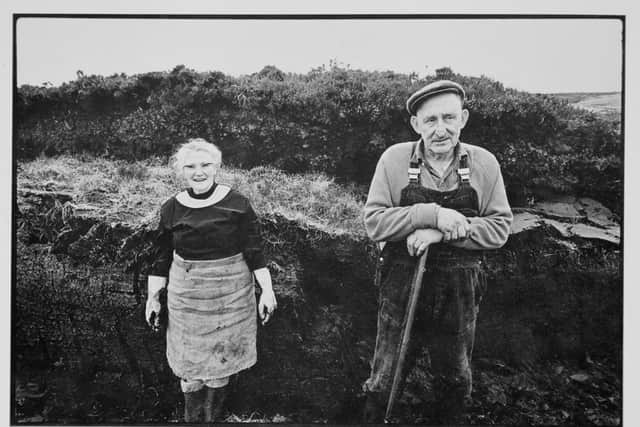
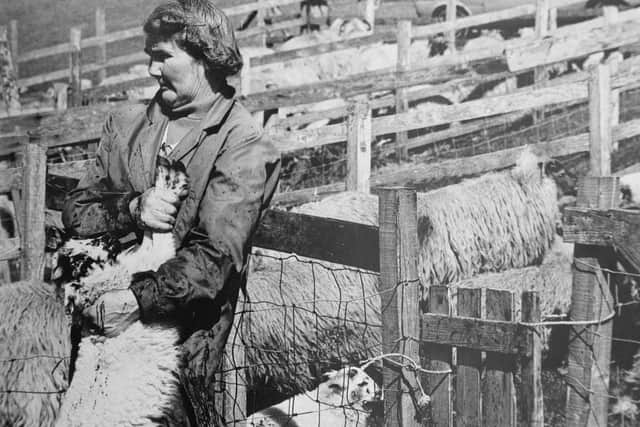
From the early 1970s onwards, having been drawn to the Hebrides, Wylie’s work respected and reflected islands and islanders. It also bequeathed a collection of images which captured a society in the process of quite rapid change.
Murdo Macleod from Shawbost, who has forged his own distinguished career in photography, is one of those who drew inspiration from Wylie’s work.
He says: “Wylie’s pictures are era defining - an invaluable cultural asset and tremendous legacy. I have now been a professional journalistic photographer myself for over 40 years and these thoughtful, caring, compassionate images still follow me through every single day”.
The book which really introduced Gus Wylie to “The Hebrides” (which was its title) was published in 1978 with support from the Highlands and Islands Development Board. It was an era in which the old HIDB acted as a patron of creative talent, to present a more realistic picture of the region than could be found in picture postcards and glossy magazines.
Gus Wylie’s introduction to this circle came through his friendship with Derek Cooper, the writer and broadcaster whose principal connection was with Skye, of which he wrote what remains the authoritative gazeteer in the 1960s. Derek’s books, like “Hebridean Connection” and “The Road to Mingulay” are themselves important works in capturing the spirit of the islands at a certain moment in time.
Wylie himself was from Lowestoft and during the war was boarded out to family members in Fife. But it was Cooper who introduced him to the islands and over 20 years, his images often accompanied Derek’s own writings.
The creative talents hired by the HIDB in the 1970s included Allan Campbell McLean, who wrote a coffee table book which did not shirk from subjects like the Clearances and their lasting impact; the film-maker Murray Grigor and photographers Gus Wylie and Oscar Marzaroli. All of them were given licence to reflect social realities of life in the Highlands and Islands, rather than tourist board clichés.
Murdo Macleod recalls: “The ‘Hebrides’ book was published when I was 15 years old and still in school. Its appearance on Stornoway bookshelves was the first I knew about it. The effect on me was seismic.
“My elder brother lent me money to buy the book and we devoured it. We had never seen such a book. It was such a strange mirror to us but an entirely mesmerising one. It held two fascinations. Firstly I had, by myself, taken an interest in photography, bought a camera and begun to quietly process film at home.
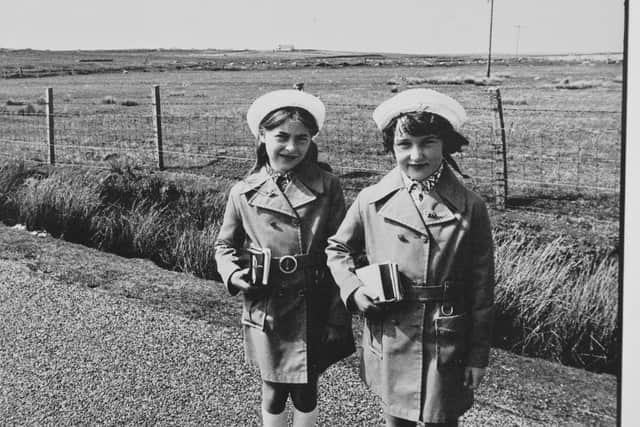
“Secondly and more arrestingly. two of my school friends were portrayed in the book. The photographer had encountered my siblings and cousins walking to Sunday School and one of the behatted girls had ended up on page 112. I was off sick, otherwise I might well have witnessed the artist in action”.
A couple of years later, Murdo met Gus Wylie at the home in Shawbost of Dr Finlay Macleod, whom he had befriended during his early visits to Lewis and who, for many contacts, became his “go-between”. Murdo recalls: “By then, through the perceptive intervention of Roddy John Macleod, a maths teacher at the Nicolson Institute, I had secured an interview for a course in photography offered by Napier College in Edinburgh.
“Gus was encouraging during our chat but it was his photographs really that propelled and motivated me, more than meeting the man. They raised so many questions about who you even were - what you might capture, how it was culturally framed and who were you speaking to as the intended audience”.
Not everyone was as enthused by the book or Wylie’s portrayals. I remember being at a launch event in London attended by the chairman of the HIDB, Sir Andrew Glichrist, who was a very undiplomatic retired diplomat. When called on to sign a visitors’ book to mark the event, Sir Andrew inscribed: “Where are all the pretty gals? Nothing here but old crofters with gammy legs”.
Beauty, as they say, is in the eye of the beholder and Sir Andrew found himself in a small minority. Wylie’s pictures from that collection continue to be ingrained as representative of the islands at a certain point in time. Much of what he recorded in black and white would be gone within another decade or generation.
“Patterns of the Hebrides” followed in 1981 with a more intense focus on two areas of Lewis and one in Skye. “In the schools”, wrote Wylie, “I became part of the classroom … I was gratified, after the project’s completion, to have a letter from a little girl in the school at Breasclete and sent to my address in St Alban’s. ‘Dear Mr Photographer’, it began. To gain this kind of acceptance in a small Hebridean school takes time”.
In 2004, a further book – “The Hebrideans” – was published as a retrospective of Wylie’s work in the Hebrides over, at that point, more than 30 years. He continued to visit and take pictures for years thereafter.
Sam Maynard is another who benefited from Gus Wylie’s long association with the islands. He recalls: “It was 1981 and Doc Finlay managed to procure the unoccupied Council Chambers on the first floor of Stornoway Town Hall to display Gus’s work. I remember the exhibition well and meeting Gus for the first time.
“I’d studied documentary photography and had only recently arrived in Lewis to work for the Gazette. Gus had an easy warmth that explained the obvious trust he'd formed with the islanders he'd photographed. I was so impressed with the quality, vision and humanity of his work, but it was his framing that I found so unique.
“Placing his subjects within the wider context of their environment and deliberately shooting to give maximum depth of field told so much more of a detailed story than a simple close-up portrait”.
Sam says: “Weirdly, just a month or so ago and not long before I'd heard of Gus’s passing I found myself leafing through The Hebrides book. I was reminded of just how clever the man was. He’d created an important multi-layered archive of work that features not just the breadth of society in the islands at that time but through his technical mastery and composition, their passion, desires, taste and style”.
There was another form of legacy from that initial meeting. Sam recalls: “The other reason I remember meeting Gus in the Town Hall is that his exhibition partly inspired a group of us to create An Lanntair. Scroll forward three or four years from Gus’s show to March 1985 and the old Council Chambers was filled with the great and good listening to Ian Crichton Smith opening the fledgling An Lanntair Gallery”.
His island photography was a major part of Gus Wylie’s career and he also chronicled his home county of Norfolk. But his “day job” was as a teacher of fine arts and photography. He taught at The Royal College of Art in London, the Rochester Institute of Technology in New York, and directed the MA in Fashion Photography at the University of the Arts, London. He was awarded an Honorary Fellowship of the Royal Photographic Society in 2005.
However, his thoughts and his camera were never far from the Hebrides. “The French say that good cooking is like good painting;” he reflected. “You can taste it but you can’t explain it. You can’t explain a good picture. You can feel it but you can’t explain it. And you have to love the people you are photographing. And believe me, I love the people here”.