
Information awaited on accelerator model

A scheme which could allow Comhairle nan Eilean Siar and the other two islands authorities to borrow money in order to leverage in private investment has been referred to in the Scottish Government’s budget and welcomed by the Comhairle.
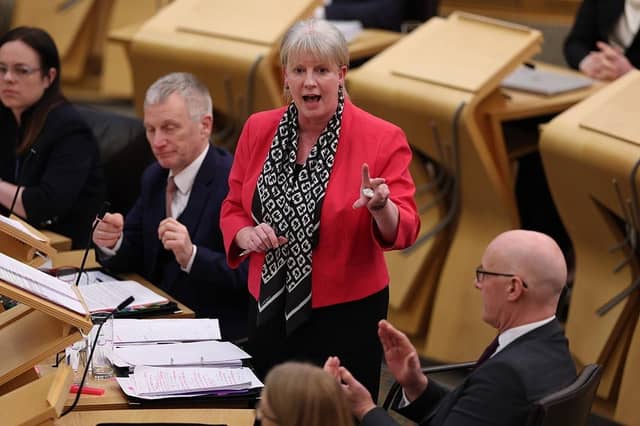
The Finance Secretary, Shona Robison, said: “We are working with our partners in Shetland Islands Council, Orkney Islands Council and Western Isles Council to agree a new accelerator model—a transformative package of funding that, we believe, can unlock hundreds of millions of pounds of investment in those island communities”.
Beyond that, no information was provided about what an “accelerator model” is, how it would operate or whether it is accompanied by any immediate additional funding for the cash-strapped Comhairle.
A statement from the three islands councils said they had been “working with the Scottish Government for several months on this matter” and welcomed the “announcement of an Islands Accelerator Model”. It is understood to be a form of Public Private Partnership to invest in infrastructure linked to environmental targets.
The statement continued: “It is essential that our communities see clear and lasting benefits from the transition towards renewable energy production. Better infrastructure on our islands is an essential element of this transition and will also enable the Scottish Government to achieve its renewable energy ambitions”.
In response to a request for additional information, a Comhairle spokesman said: “The accelerator model is an outcome-based funding model that has previously been used to deliver the St James Quarter and Granton Waterfront projects in Edinburgh. When the detail of Western Isles projects has been developed and agreed, a clear timeline and schedule of payments will be developed. Rather than delivering full funding in advance, the Accelerator model will distribute revenue payments subject to the delivery of these agreed outcomes over the lifespan of the programme of projects”.
In other announcements, the business rates relief for retail, hospitality and leisure premises located on islands and specified remote areas, capped at £110,000 per business per year, has been continued for another three years.
Following Ms Robison’s statement, Western Isles MSP Alasdair Allan asked her to “outline what specific support is included in the budget for those in rural and island areas who struggle with rising (energy) bills?”.
Ms Robison replied that the budget continued to “support the islands cost crisis emergency fund, which, since 2022, has distributed £1.1 million for Western Isles Council”.
In general, the Fraser of Allander Institute described it as “a Budget where the silences were loudest” and that “relative to plans laid out in June, the Finance Secretary has had to cut day-to-day spending by £480 million, largely due to much weaker underlying tax forecasts from the Scottish Fiscal Commission”.
On the changes to income tax bands, Fraser of Allander said that “the maximum benefit to any taxpayer is £32 a year. But because everyone above those thresholds benefits – including people on the very highest incomes – this very small change in tax liabilities costs over £50 million”.