
Loganair: “We expected HIAL to talk to ministers”
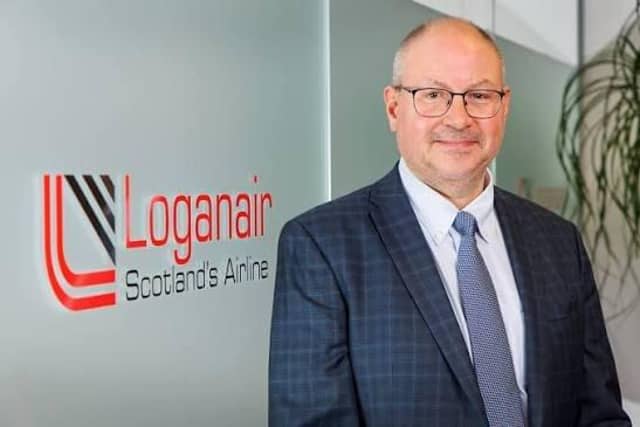

Loganair has piled pressure on Highlands and Islands Airports Limited and the Scottish Government to explain why there was no public information about the withdrawal of lifeline air services until it was announced.
They have also warned that services between Stornoway and Inverness could be withdrawn altogether unless a solution is found.
As reported last week, the convener of Holyrood’s transport committee, Willie Rennie MSP, declared himself “astonished” that there was no communication between HIAL and the Scottish Government in the three months after Loganair intimated their intentions.
Essentially, they were asking for the Scottish Government to channel £1.3 million via HIAL to subsidise retention of the twice daily services between Inverness and the three island airports – Stornoway, Kirkwall and Sumburgh.
Now, in a letter to Mr Rennie, the chief executive of Loganair, Luke Farajallah, has written: “Loganair was asked why fair warning had not been given to stakeholders before a final decision was made on the route reductions.
“I must stress that we had raised these risks frequently with senior representatives of HIAL over several months before taking the decision to implement the changes. Our reasonable expectation was that HIAL would, in turn, communicate openly with its stakeholders, including senior representatives of the Scottish Government”.
This would be to “explain the potential consequences should that funding not be secured” and to “seek the necessary funding to enable fee reductions”.
Mr Farajallah continued: “It is now clear that this escalation route did not operate as we had expected. Going forward we will ensure that other key stakeholders are engaged directly so that this issue cannot arise in the same way again. We are disappointed that the communication channel did not function as we reasonably understood it would”.
The Loganair letter also warns that there could be further cuts unless a funding solution is found. It suggests: “The most meaningful action available to restore these services in full from October is for Government to find a route to address the (funding) gap
"I must also make clear that, should that funding not materialise, there remains a risk that the remaining frequencies between Inverness and the connected airports in question may be reduced further, or in the worst case, withdrawn on a permanent basis”.
The chief executive adds: “This is an outcome Loganair does not wish to see and we would urge immediate action from HIAL and its relevant stakeholders to prevent it”.
Mr Rennie told the Gazette this week that there were “many questions to answer” after his committee’s initial hearings on the subject last week. He expects a fuller inquiry to be undertaken later this year.
In the meantime, he has written to local authorities and Health Boards in the affected island groups, asking for their views and information about the impact of the current cuts which are due to take effect from July 20th.
At last week’s hearing, the chief executive of the Western Isles NHS board, Gordon Jamieson, said that the cost of losing the morning service could be up to a £1 million due to consultants from Inverness having to be replaced by agency locums, on top of around £100,000 for additional passenger travel costs.
In another letter to Mr Rennie arising out of the committee hearing, HITRANS have disputed a claim by Loganair that traffic on island routes did not rise when competition existed. During the period of competition, passenger traffic on the Glasgow-Stornoway route increased by 33.4%.
The figures demonstrated that “demand for Highlands and Islands air travel is responsive to price and more affordable fares can stimulate significant growth in passenger numbers”.