
Skye land sale demonstrates why land reform is moving further away
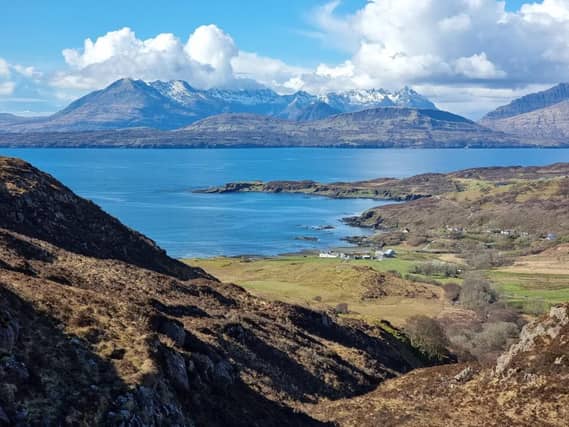

The decision by the Clan Donald Lands Trust to flog off 20,000 crofting acres of Sleat in Skye for £6.75 million has prompted predictable hand-wringing from people who have long had it within their gift to do something about it – and chose not to.
It has been apparent throughout these years that the “crofting community right to buy” as defined in the 2003 Land Reform Act is, to all intents and purposes, unusable in the face of an obstructive landowner. Bernera and Bays of Harris are continuing evidence; others no longer bother to try.
From my own knowledge, I believe this is what the civil servants who drafted the 2003 legislation intended. They opposed the “crofting community right to buy” as a radical challenge to private land ownership. Faced with Ministerial insistence, they reluctantly restored a “crofting community” section to the Bill - but made it so complicated as to be unusable. And so it has proved.
Readers are entitled to dismiss that as my own conspiracy theory. Two decades on, it doesn’t really matter. What nobody can contest is that it has been apparent for at least 18 years that Section 3 of the Land Reform Act 2003 is a dead end in terms of delivering the nominally intended outcomes. So why has nothing been done?
It would have been a relatively simple legislative task to correct this, based on the essential legal distinction between land under crofting tenure and the non-crofting generality of Scottish land ownership. Instead, that crucial distinction continues to be steadily eroded.
Historically, the Crofting Acts placed massive constraints on the powers of crofting landlords. This was widely understood and seriously limited land values. In the early 1970s, for example, when Iain Noble bought the other half of Sleat, he paid £120,000 for 20,000 acres and an hotel. At today’s prices, £1.4 million.
In response to the Clan Donald’s announcement, a statement from the chairman of the Scottish Land Commission, Michael Russell, was tragi-comical in its feebleness. “When large areas of land change hands”, he pleads, “we encourage the seller to engage directly with local communities in advance”.
I don’t know if Mr Russell noticed the Clan Donald price tag. It seems unlikely that a seller looking for that kind of money will be terribly interested in “engaging” with any impediments to selling for that sum or probably more, regardless of who wants to buy.
The Clan Donald acres in Sleat are under crofting tenure and the only way to create a community right to anything – consultation, consideration, a right to buy – is through legislation which the Scottish Government has refused to bring forward. If nothing else, the Clan Donald sale confirms that reality.
Mr Russell’s statement continued: “While there is currently no legal requirement for sellers to do this” – i.e “engage in advance” – “it should be considered responsible practice”. In the real world, there are only nine words in the midst of this verbiage with any significance: “There is currently no legal requirement to do this”.
Since Mr Russell was a long-serving SNP Minister, now implanted as chairman of the Scottish Land Commission, the obvious question to him becomes even more obvious: “Why not?”.
In fact, the exact opposite has happened. There is currently a “Land Reform Bill” going through Holyrood which does not mention crofting and a “Crofting Reform Bill” which does not mention a community right to buy.
The 2003 Act had a section headed “Crofting Community Right to Buy” which distinguished it from another section headed “Community Right to Buy”. Even if the former was doomed to fail in its objective, it at least respected the difference. The current Land Reform Bill makes no such distinction. Without being uncharitable, I doubt if the Ministers putting it through even understand that distinction – far less its historic significance or current potential.
The steady erosion of crofting regulation has helped “normalise” the market in crofting land, betraying protections which previous generations fought for. Even worse, the Scottish Government is incentivising speculation in crofting estates – just like any others – under the guise of environmental benefits.
In the case of Sleat, the Strutt & Parker brochure declares that 566 hectares have been identified for “peatland restoration and carbon accreditation potential”. Not to mention “potential for future wind development”. All of which helps get to the £6.75 million asking price for a crofting estate.
For most of Scotland, land reform is further away than ever. The more the distinction between crofting estates and the rest is eroded, the less chance there will be of the outcomes being any different. Driving up values of crofting land, far beyond the interest of communities, is an insidious, ongoing process.
The test for whether anyone understands or cares about that betrayal of history and of future opportunity now lies in the current Holyrood legislation.
(To contribute to Open Forum email: [email protected])