
Time to stop pussy-footing on crofting

Crofting is dying. At least, that’s the prevailing narrative — and it’s hard to argue otherwise. Look around the sale ring in a local livestock mart and you might well come to the view that the prognosis is terminal. Older faces by far outnumber the young.
The most recent Scottish Government analysis, published in 2022, confirmed what is plain to the untrained eye. It found that 42 percent of crofters were over 65, while only three percent were under 35.
But there is still hope. Amid the gloom, and the sheep and cattle, there was cause for optimism on display at South Uist and Benbecula Agricultural Show last weekend.
There, I spoke with half a dozen young crofters, all of them under 25. Their evident passion for rearing stock — and winning prizes — was a tonic. Even the organising committee tells a story in itself. Of the 14 members, more than half are under 40. Crofting may have a future after all.
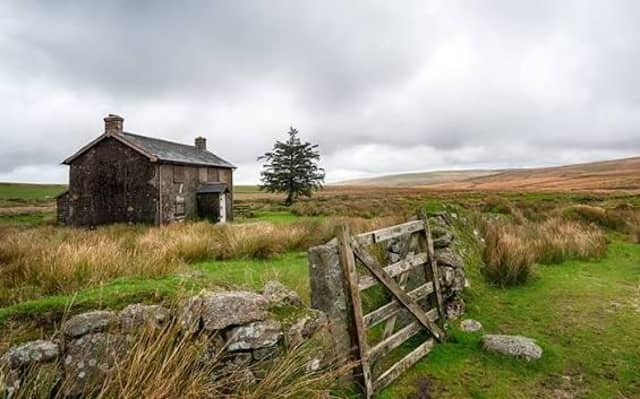
Yet, step outside the vibrant bubble of the showground, and the broader reality reasserts itself. Cast a glance around our villages. Stone ruins, fixtures on so many crofts, symbolise the long-term decline of our communities.
Where once a fire glowed in the hearth, nettles spring forth. Walls, in the past coated with lime, are now insulated with a layer of moss. The people, the large families that dwelled within, are long departed.
Now the land is degrading too, choking as it becomes overrun with heather and rushes. Good, workable ground is rapidly depleting. Barren common grazings are increasingly infested with deer, like maggots in a carcass.
It is as though the crofting counties are suffering from a creeping wasting disease. Large parts of the landscape are being abandoned to neglect, and young blood, the life force of crofting, is running dangerously thin.
Two questions arise. First, how do we increase the number of young people entering crofting? Second, what inheritance is this generation preparing to leave for the next?
The recent history of crofting has been one of deterioration, and the trickle of young people entering tenancies is vanishingly small. How do we reverse this?
Inevitably we must look to our government and its agency. The Crofting Commission exists to regulate crofting in Scotland. But it is also, apparently, tasked with protecting and strengthening crofting for future generations. It’s not clear to me how the latter is being achieved.
We must start by confronting the reasons for the decay of the foundational asset — the land.
Absenteeism is definitely one. I don’t have to look far to see crofts tenanted by people based far beyond the distance required by law. These parcels of land are often unworked and uncared for. Where they are used, by another locally based crofter, the level of upkeep is minimal.
But let’s not pussyfoot around. There are plenty of crofts held by tenants who live on the land, which are also understocked and poorly managed.
They do just enough to tick the regulatory box, just enough to keep the Crofting Commission from intervening, while leaving the agricultural asset to wither.
It appears that the Crofting Commission is using the power to sublet as a means to curb the problem of absenteeism. It’s short-term thinking.
I’m seeing absentee tenants setting up sublets with cousins to hold on to crofts a little longer.
However, those relatives don’t invest in the maintenance of the croft, never mind township infrastructure. No wonder! They’re not there for the long haul. They could be out the minute their absent cousin decides to return. Which they probably won’t. On paper, the number of absentee tenants, the number of tenants in breach of their statutory duties, is likely reduced. But the fundamental problems persist, no matter what the spreadsheets say. The land continues to rot.
It’s fine to administer crofting, to process the forms and tick the boxes. The data can tell a pretty good story.
But who is actually developing crofting? Who is monitoring the health of crofting and striving to ensure it is futureproof?
The solutions are not impossible. Forcefully assigning dormant, neglected crofts directly to young entrants would immediately breathe life back into the soil. Encouraging older, inactive crofters to pass their tenancies to the next generation, perhaps through financial incentives, would create a natural, dignified succession pipeline.
Radical housing interventions — like meaningful grants for croft houses or using common grazings for affordable community housing — are desperately needed.
These are only ideas. There will be others. Crofting is in poor condition, but a strong dose of medicine can save it.
We need action now, before the land diminishes beyond the point of repair. We need to bring more young people into crofting. We must prioritise real, active land use. The question is, who will grasp the nettle? Who will kill the disease?